
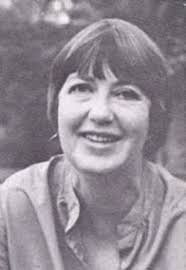
Beautiful tribute today in the TAZ by Benno Schirrmeister to the poet Lisel Mueller, who turns 95 next month. Born in Hamburg in 1924, Mueller fled Nazi Germany with her family and arrived as a teenager in America's heartland and was forced to learn a new language. She has received many accolades here, but is virtually unknown in Germany. As far as I know, her poems have not been translated in German.
Vergessen ist keine Option. Lisel Mueller darf nicht in Vergessenheit geraten. Und das ist schon eine Herausforderung, weil Lyriker*innen, so scheint es, sehr schnell vergessen werden. Hinzu kommt, das so wenige in Deutschland überhaupt etwas davon ahnen, dass es diese bedeutende Dichterin gibt, die im Februar 95 Jahre alt wird. Schlechte Voraussetzungen, um ein eher stilles Werk wahrzunehmen, in dem das Private unversehens in die Fänge der Weltgeschichte gerät und dessen reimlose Verse banalstes Alltagserleben untrennbar mit Politik verschmelzen. Denn das ist es, was immer wieder passiert in diesen Gedichten von – wie hieß sie noch gleich? Lisel Mueller?
Es ist eine Schande, dass fast niemand Lisel Mueller kennt.
Learning American English as a teenager in mid-century Indiana must have been challenge, but luckily she found a wonderful teacher/model: Carl Sandburg, "because English was still relatively new to me, and Sandburg, of course, wrote in a very easy-to-understand, very colloquial and informal manner." The fact that Mueller learned English relatively late informs much of her poetry: she is sensitive to the richness and idiosyncracies of the language. One of her poetry collections has the title Second Language. But she never completely gave up her native German and published many translations of the poetry of Mari Luise Kaschnitz. Nor did she forget her German roots. One of her best-known poems – Curriculm Vitae – deals with her birth in the Weimar Republic: I was born in a Free City, near the North Sea / In the year of my birth, money was shredded into confetti. A loaf of bread cost a million marks. Mueller writes about the tragedies of world history, yet her poems are intensely personal, as Schirrmeister writes.
Mueller gehört keiner der herrschenden Dichtschulen an. Zur Beat Generation unterhält sie keinen Kontakt, das ist auch eher so ein Männerding. Unüberwindbarer scheint ihre Distanz zur Confessional Poetry, deren Exhibitionismus ihr zuwider ist. Ihr Schreiben hat Mueller in Essays und Interviews als strenge Arbeit der Reflexion beschrieben, einen Prozess der Formalisierung von Gefühlen – auch um sie selbst überhaupt verstehen zu können. Es geht um Erkennen, nicht um Bekenntnis, auch wenn Auslöser des Schreibens die Biografie, der Tod der Mutter ist: Lisel Mueller ist damals 29 Jahre alt, hat außer Teenager- und Schul-Lyrik nie geschrieben. Jetzt merkt sie, dass sie Gedichte verfassen muss, und mehr: dass sie damit nicht mehr wird aufhören können.
In the poem When I Am Asked, Lisel Mueller writes about how she found her voice as a poet as a means for dealing with the grief on the death of her mother:
When I Am Asked
When I am askedhow I began writing poems,I talk about the indifference of nature.It was soon after my mother died,a brilliant June day,everything blooming.I sat on a gray stone benchin a lovingly planted garden,but the day lilies were as deafas the ears of drunken sleepersand the roses curved inward.Nothing was black or brokenand not a leaf felland the sun blared endless commercialsfor summer holidays.I sat on a gray stone benchringed with the ingenue facesof pink and white impatiensand placed my griefin the mouth of language,the only thing that would grieve with me.
