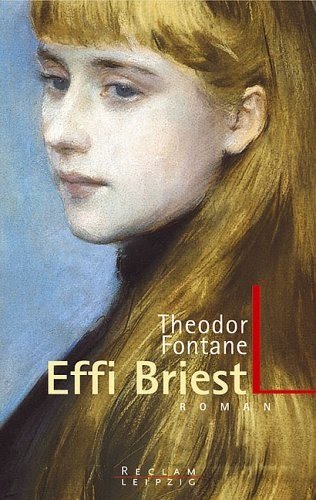
Recently, in an effort to forget, at least for a bit, the annus horribilis 2017 I turned again to one of my favorite novelists – Theodor Fontane. I had not read Effi Briest since my university days, so I looked forward to reacquainting myself with Fontane's most famous work. I was not disappointed, it is still a good read. I do not consider Effi Briest as one of Fontane's greatest works (his best novel is definitely his very last one: Der Stechlin (1898)). Nevertheless Effi Briest is one of the most unforgettable figures in German fiction, and it is astonishing that Fontane, who was 76 years-old when writing the novel, could so convincingly capture the sensibilities of a teenage girl. And Fontane left us with some of the most unforgettable scenes in German literature: Effi haunted by "der Chinese", the Christmas feast and quick seduction of Effi on the sleigh-ride home by Major von Crampas, Baron von Innstetten's discovery of his young wife's infidelity, von Crampas's death in the duel with Instetten, and then Effi opening the letter from her parents and realizing that her life as a wife and mother was over for good.
Of course, Effi Briest has all of Fontane's familiar themes: the (already outdated) conventions of the Prussian aristocracy (Ehrenkodex), the practicality and common sense of the lower classes (personified here in the figure of the nanny Roswitha), couples sacrificing their own happiness to preserve social decorum (see also my review of Irrungen Wirrungen). But something else struck me this time around reading Effi Briest – namely, the age difference between Effi and Baron von Instetten. And here, I'm afraid, current events intruded on my enjoyment of the novel. President Trump recently endorsed the candidacy of Roy Moore, an accused molester of teenage girls. In his late thirties, Roy Moore apparently stalked teenage girls at the local mall, and even assaulted girls younger than Effi, who was 17, – 21 years younger than Instetten when they married. I found it rather creepy that Instetten had once been a suitor of Effi's mother, who was only too glad to sacrifice her young daughter to gain social status. And Instettin treats Effi like a young schoolgirl, not as a wife: Effi and Major von Crampas later joke about how "pedantisch" her husband is. After the infidelity is discovered, Effi looks back on her broken marriage and admits that Instetten was "ohne echte Liebe" and she recalls how he used to read to her in the evening, like a father reading a bedtime story to his child. And in the novel's final scene Effi's mother admits her own role in the untimely death of her daughter:
"Und dann, Briest, so leid es mir tut […] und zuletzt, womit ich mich selbst anklage, denn ich will nicht schadlos ausgehen in dieser Sache, ob sie nicht doch vielleicht zu jung war?"
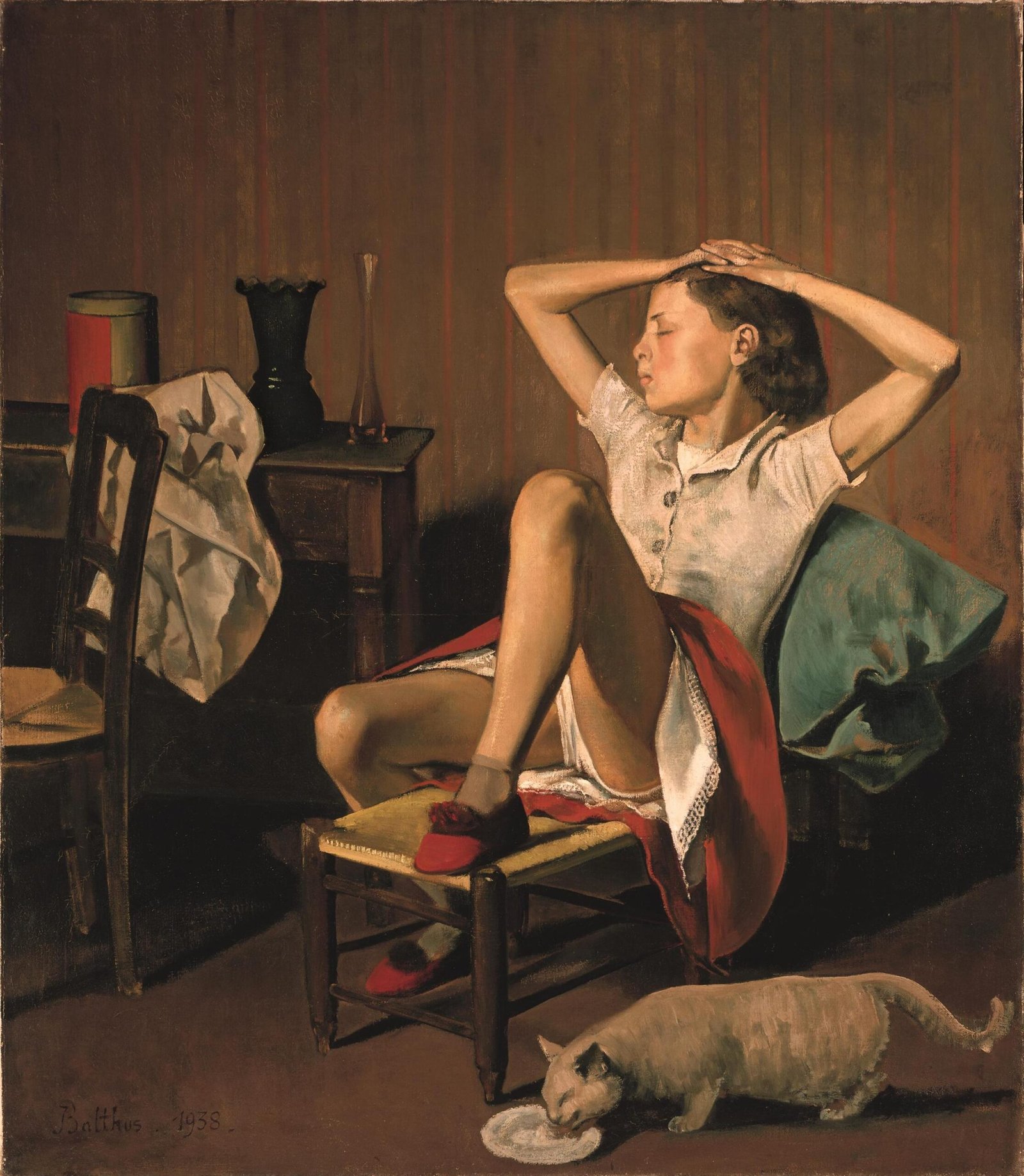
Of course, Fontane handles this age disparity in the novel with humor and subtlety. Hopefully, Effi Briest will never suffer the fate of Vladimir Nabokov's masterpiece Lolita, which is now damned as a "a gruesome celebration of pedophile rape". Or of the artist Balthus, who painted young girls: now people are clamoring for the removal of his painting Therese Dreaming from the New York Metropolitan Museum.