
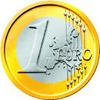
President Bush vowed last week that he would use his "mandate" coming out of the narrow reelection to make the tax cuts permanent. This was bad news for the currency markets and the US dollar plunged against the Euro, falling to a historic low of €1.00 = US$1.30. Mark Landler reports in today’s New York Times on the growing anxiety in Europe resulting from the fiscal mismanagement in Washington:
"Now, the European Commission and private economists are scrambling to reduce their forecasts for the rest of this year and 2005. While nobody is hoisting the red flag of recession, some economists said that growth in Germany, at least, was at risk of petering out entirely.
Jörg Krämer, the chief strategist at Invesco, an asset management company in Frankfurt, said there was a significant risk that Germany could suffer zero growth for a time. "I’ve been labeled a pessimist," he said, "but even a pessimist can be overly optimistic."
Mr. Krämer’s pessimism is widely shared in this case, because most economists expect the euro to rise further in 2005. The persistent budget and trade deficits in the United States, and the reluctance of Asian countries to let their currencies rise in value against the dollar, suggest that the euro will continue to absorb the bulk of the pressure from a weak dollar.
At its current rate of increase, the euro would hit $1.40 by the middle of January. On Friday, it was trading up a bit from the day before, but down from its peak on Wednesday of $1.3006.
"We have to accept that we are in a long-lasting dollar bear market that will drive the euro to new heights," said Thomas Mayer, the chief European economist at Deutsche Bank"
If Germany is the economic engine for Europe, and exports drive the German economy, then the outlook is very bleak indeed. Der Spiegel has an interview today with Finance Minister Koch-Weser, who places the blame squarely on the shoulders of President Bush:
"Das Doppeldefizit im Haushalt und der Leistungsbilanz der Vereinigten Staaten beunruhigt die Märkte. Das Ergebnis der US-Wahlen hat diese Sorgen nicht mildern können", sagte Koch-Weser. Er begründet dieses Urteil mit der auf Pump finanzierten Steuersenkungspolitik Bushs: "Die Bush-Administration hat bereits in der abgelaufenen Legislaturperiode in großem Umfang die Steuern vor allem für Top-Verdiener ermäßigt. Das war ökonomisch nicht optimal, denn es hat die Wirtschaft kaum belebt und große Haushaltsdefizite verursacht."
Americans will enjoy a temporary benefit from the weak dollar as exports from the US become more competitive. But in the medium-term the weak US dollar will be disasterous, as Japan and other Asian investors balk at buying US Treasury notes. Another unintended consequence of the Bush reelection: The Euro is king.
