
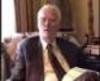
The New York Times has an informative obituary of Drexel Sprecher, who died in March at the age of 92. Sprecher was one of the team of prosecutors under Robert Jackson who presented the case of conspiracy to wage aggressive war. Sprecher was one of the few Americans who knew German, and, through a lucky tip came into possession of Alfred Rosenberg’s papers, where the outline of the invasion of Norway was described in detail.
Because the Germans invaded Norway the next year, the report supported the theory that the invasion had been plotted. Investigators then found material from just before the invasion of other countries.
Another example of Mr. Sprecher’s research was a memorandum he sent Colonel Storey on Sept. 21, 1945, which included a list of 535 people the Nazis listed as members of the opposition in 1939. If these people were later persecuted, he said, it would prove conspiracy.
In a fascinating interview with Court TV Sprecher spoke about the difficulty in proving conspiracy – and defining the scope of conspiracy:
QUESTION: What about the conspiracy charge? Wasn’t that a new notion to the French and Russian and German lawyers at Nuremberg?
SPRECHER: Well, partly it was. The main problem in my view, the conspiracy charge was that we made it too broad. And we said the Nazi conspirators, meaning all the men in the dock, plus some others, did so and so.
Now, as a matter of fact, there were very great variations among the defendants and others as to what they did, and why they did it.
And the tribunal cut the conspiracy charge back a great deal, and had it start in November, 1937. And they found only ten of the de– these defendants guilty. And many other people, of course, were therefore not involved at all in this narrower conspiracy. Our mistake was making too broad a mis– conspiracy charge.
The — the French, the Germans and the Russians have some notion of conspiracy, but it’s a much more limited one than ours was. And so the final result was closer, moved more in their direction and less in the Anglo-Saxon direction than was the case at the beginning of the trial.
The entire inteview is worth reading, because Sprecher is quite open about mistakes made by the Americans (and the others) during the trial. You can also watch a video of Sprecher speaking about the Nuremburg Trial at the Robert Jackson Center Web site. (note: anyone interested in the trial should also visit Harvard Law School Library’s Nuremberg Trials Project, which is indexing and digitizing over a million pages of transcripts).
One related item: The Boston Globe reports on the archives at Bad Arolsen which finally will be open to historians and researchers later this month.
