
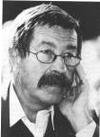
Here is a sad coda for a brilliant literary career in decline: the Associated Press reports:
Nobel laureate Guenter Grass has filed a lawsuit against the publisher of his biography for claiming that he voluntarily joined the Nazis’ murderous Waffen-SS unit during World War II, his lawyer said Friday.
Attorney Paul Hertin said he filed a request for an injunction against Random House — which owns the biography’s publisher Goldmann Verlag — earlier this week at a regional court in Berlin. It contained an affidavit by the 80-year-old writer in which he contends he was drafted to the SS and did not join the service voluntarily, Hertin said.
The unfortunate lawsuit calls attention once again to writer’s decades-long unconscionable silence concerning his role in the SS as he was serving as the self-proclaimed moral scold of postwar Germany. Grass’ literary legacy is now undergoing a critical reassessment, and the results are not positive for the 80-year old writer.
When I first read Die Blechtrommel as a college student it was an exhilerating experience. Grass’ Danzig was an epic creation that could stand along side Joyce’s Dublin and García Márquez’s Macondo as a masterpiece of literary imagination. The imaginative power was sustained through Hundejahre and Katz und Maus. But then Grass appears to have read too many of the critical reviews of his work, and he began to see himself as the mouthpiece for social justice, which could only be achieved through the programs of the SPD. His work became tendentious, self-righteous – a platform for making a political statement.
I met Günter Grass once – at a Goethe Institue event in Boston where he read excerpts from his novel Der Butt. In his comments after the reading, Grass made condescending comments about America (he obviously made the US book tour only at the insistance of his publisher) and mocked the earnest questions from some of the students in the audience. It was then that I began a serious reappraisal, and I was not shocked when I learned last year about his SS secret.
I now feel that Wolfgang Koeppen’s postwar trilogy is a greater literary achievement than Grass’ entire oeuvre. And the reputation of Walter Kempowski – a writer Grass dismissed while he was alive – will only grow over time. Kempowski made it his life’s work to uncover the truth in history – to make the past vivid and chronicle the present- while Grass’ primary objective – we now know – is concealment.


0 comment
Grass is like so many who “own” the left.
Vonnegut is much more to my liking, and he never spoke a tendentious word in his life.