
Malcolm Gladwell has a terrific piece in the New Yorker Magazine on the relationship between genius and precocity. We tend to associate, Gladwell writes, creativity – especially artistic creativity with youth.
"Genius, in the popular conception, is inextricably tied up with
precocity—doing something truly creative, we’re inclined to think,
requires the freshness and exuberance and energy of youth. Orson Welles
made his masterpiece, “Citizen Kane,” at twenty-five. Herman Melville
wrote a book a year through his late twenties, culminating, at age
thirty-two, with “Moby-Dick.” Mozart wrote his breakthrough Piano
Concerto No. 9 in E-Flat-Major at the age of twenty-one. In some
creative forms, like lyric poetry, the importance of precocity has
hardened into an iron law. How old was T. S. Eliot when he wrote “The
Love Song of J. Alfred Prufrock” (“I grow old . . . I grow old”)?
Twenty-three. “Poets peak young,” the creativity researcher James
Kaufman maintains. Mihály Csíkszentmihályi, the author of “Flow,”
agrees: “The most creative lyric verse is believed to be that written
by the young.” According to the Harvard psychologist Howard Gardner, a
leading authority on creativity, “Lyric poetry is a domain where talent
is discovered early, burns brightly, and then peters out at an early
age.”
Gladwell then goes on to discuss some notable exceptions ("late bloomers") to this rule – most notably the painter Cézanne , who only reached the pinnacle of his art well into his sixties. Gladwell then posits – unconvincingly, in my opinion – a fundamental difference between youthful artistic genius and that of old age.
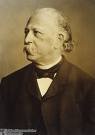
For me, the most astonishing example of "late blossoming genius" is the 19th century novelist Theodor Fontane (1819-1898). Fontane spent the early part of his life as an apothecary in the service of the Prussian army. He later became a journalist – more of a propagandist, actually – and foreign correspondent. There is little in his early works of writing to indicate what was to come later.
At the age of 57, Fontane began his career as a novelist, completing 16 novels before his death at the age of 78. He was 73 when he wrote his masterpiece – Effi Briest – which has often been compared to Madame Bovary. My personal favorite – Der Stechlin – about an old Prussian Junker who sees his world vanishing before his eyes – was written the year of his death. Fontane’s creativity never abated, in fact, it only accelerated has he grew old. He died at his writing desk.
Fontane’s greatness is inextricably linked to his age. It is impossible to image any of his novels as the works of a young writer. Thomas Mann recognized this in his essay Der alte Fontane (1910) (The Old Fontane). He will always be remembered as "the old Fontane":
"He was born to be the "old Fontane" and he will live. The first sixty years of his life were, alomost consciously, merely a preparation for the last twenty. His life seems to teach that only being prepared for dying is truly being prepared for living."

0 comment
You encourage me to re-post a piece I did a long time ago on Effi Briest.
Oh, and I’m still working on my daughter to get her thesis for you. I’m not sure she still has a word file of it any more.
@Hattie.
I look forward to reading that.